It is estimated that there are anywhere from 10,000 to 20,000 big cats kept in captivity, by private owners, in the U.S. This number is only an estimate because many states still don't require that citizens register their animals or become licensed to own these dangerous cats. Right now there is a bill before the House and Senate that could change that. HR 1998/S 1381 are the bill numbers, respectively. In order to keep our country safe, and be good animal stewards, we must pass this bill. The bill would make it illegal to possess any big cat except at accredited zoos and wildlife sanctuaries where they can be properly cared for and sheltered, and would only allow breeding at accredited zoos, along with some research or educational institutions. Current owners would be allowed to keep the cats they currently have provided they register their cats with USDA but they would not be allowed to acquire or breed more. This “grandfather” clause is necessary because there is no place for the animals to go if owners were forced to give them up, and the prospect of confiscation might create an incentive to kill animals and illegally sell their parts. Violators of the law could have their animals confiscated along with any vehicles or equipment used to aid in their activity, and could face stiff penalties including fines up to $20,000 and up to five years in jail.
Please contact your Representative and Senator today asking that they co-sponsor this bill. The sooner this bill is passed the better for us, and for the cats. Go to: www.catlaws.com to send a letter to your congressperson today.
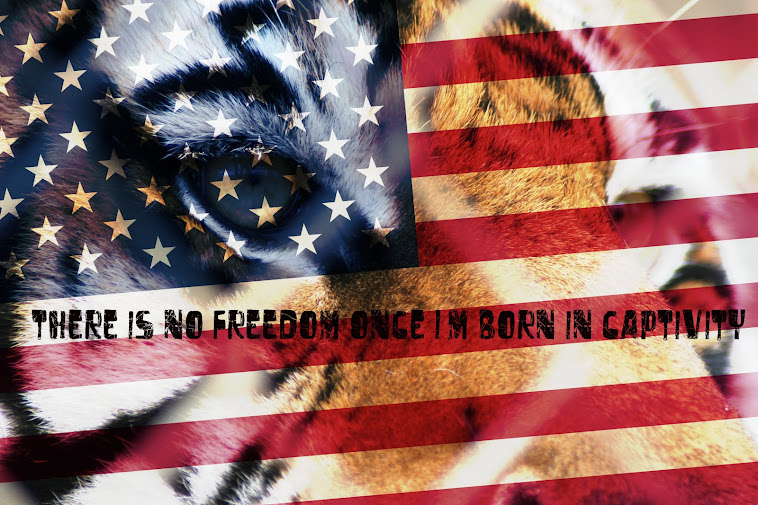
Thursday, March 6, 2014

Thursday, February 27, 2014
Good News From WWF!
My intention today was to talk about captive big cats in the U.S. but some good news from World Wildlife Fund has me too happy to think about anything else!
In 2010 WWF launched a Tiger campaign in India and Nepal with a goal of doubling the number of wild tigers in that region by 2022. Today, in the new issue of WWF's magazine, I read that the numbers of wild tigers in this region has increased by 63% since 2009! How awesome is that?! It's so encouraging to see that the hard work of Global Tiger Recovery Program, the dedication of rangers, forest guards and army personnel, has spurred this growth. The rangers and guards protect the land, prey, and tigers in this region from poaching and therefore have helped to increase the birthrate of tigers in the area. With more hard work like this in other tiger regions, we may yet save the tiger in the wild so that our grandchildren can see them and say, my grandma/grandpa helped to save the wild tigers. Your donations to organizations like this help to fund big projects like this one so that we can be a part of saving these magnificent animals. Be a member, like me, and take pride in little moments like this one, knowing that, in some small way, you were part of the reason there are more tigers in Nepal. Go to www.worldwildlife.org to see how you can help. And check out the bottom of my blog page for more links to wildlife protection and information sites.
Have a grrrrreat day! :)

In 2010 WWF launched a Tiger campaign in India and Nepal with a goal of doubling the number of wild tigers in that region by 2022. Today, in the new issue of WWF's magazine, I read that the numbers of wild tigers in this region has increased by 63% since 2009! How awesome is that?! It's so encouraging to see that the hard work of Global Tiger Recovery Program, the dedication of rangers, forest guards and army personnel, has spurred this growth. The rangers and guards protect the land, prey, and tigers in this region from poaching and therefore have helped to increase the birthrate of tigers in the area. With more hard work like this in other tiger regions, we may yet save the tiger in the wild so that our grandchildren can see them and say, my grandma/grandpa helped to save the wild tigers. Your donations to organizations like this help to fund big projects like this one so that we can be a part of saving these magnificent animals. Be a member, like me, and take pride in little moments like this one, knowing that, in some small way, you were part of the reason there are more tigers in Nepal. Go to www.worldwildlife.org to see how you can help. And check out the bottom of my blog page for more links to wildlife protection and information sites.
Have a grrrrreat day! :)
Tuesday, February 25, 2014
Tiger Facts
Tiger (panthera tigris):
 We have lost 97% of our wild tiger population in the last 100 years.There are as few as 3,200 tigers left in the wild today. The largest of all Asian cats, tigers weigh from 220-660 pounds and can be from 4-10 feet long. Tigers rely on tropical rainforest, evergreen forests, mangrove swamps, grasslands, savannas and temperate forests for their hunting habitat. Tigers typically hunt alone and depend on sight and sound to find their prey. A tiger can consume up to 88 pounds of meat at one time. Tigers typically give birth to 2-3 cubs every 2-2.5 years. About half of all cubs die before they are 2 years old. The Amur (Siberian) tiger is the largest subspecies of tiger with males weighing up to 660 pounds! The Sumatran tiger is the smallest subspecies and usually only reach around 310 pounds. The greatest threat to tigers in the wild is loss of habitat. Tigers have lost 93% of their habitat due to deforestation and urban development. Female tigers are thought to have a home territory of about 7.7 miles while males typically have around 23-39 miles, overlapping several female territories for breeding purposes. Tigers are great swimmers and can be found in the water on hot days, which in their range is nearly every day! Tiger conservation through World Wildlife Fund concentrates on maintaining current habitat space and teaching locals about tigers. Many Asians, especially the Chinese, still believe that tiger parts cure illness and provide other health benefits. They still hunt tigers for their parts and skins and hopefully, with education, this practice will stop. Conservation Parks have been set up in India and other parts of their range in hopes of preserving what little space they have left. Poaching is illegal and rangers keep watch on the park at all times. In my next segment I will be discussing the U.S. tiger situation, which is so uncontrolled and unfortunate that, for me, it is hard to believe that intelligent citizens still allow these things to go on here.

We have lost 97% of our wild tiger population in the last 100 years.There are as few as 3,200 tigers left in the wild today. The largest of all Asian cats, tigers weigh from 220-660 pounds and can be from 4-10 feet long. Tigers rely on tropical rainforest, evergreen forests, mangrove swamps, grasslands, savannas and temperate forests for their hunting habitat. Tigers typically hunt alone and depend on sight and sound to find their prey. A tiger can consume up to 88 pounds of meat at one time. Tigers typically give birth to 2-3 cubs every 2-2.5 years. About half of all cubs die before they are 2 years old. The Amur (Siberian) tiger is the largest subspecies of tiger with males weighing up to 660 pounds! The Sumatran tiger is the smallest subspecies and usually only reach around 310 pounds. The greatest threat to tigers in the wild is loss of habitat. Tigers have lost 93% of their habitat due to deforestation and urban development. Female tigers are thought to have a home territory of about 7.7 miles while males typically have around 23-39 miles, overlapping several female territories for breeding purposes. Tigers are great swimmers and can be found in the water on hot days, which in their range is nearly every day! Tiger conservation through World Wildlife Fund concentrates on maintaining current habitat space and teaching locals about tigers. Many Asians, especially the Chinese, still believe that tiger parts cure illness and provide other health benefits. They still hunt tigers for their parts and skins and hopefully, with education, this practice will stop. Conservation Parks have been set up in India and other parts of their range in hopes of preserving what little space they have left. Poaching is illegal and rangers keep watch on the park at all times. In my next segment I will be discussing the U.S. tiger situation, which is so uncontrolled and unfortunate that, for me, it is hard to believe that intelligent citizens still allow these things to go on here.
This map shows the tiger's range in 1850 in yellow/beige
and their range in 2006 in green
Monday, February 24, 2014
New Regulations Needed for Captive Bears
Although this site is primarily concerned with the welfare of big cats, when I see something to do with any animal living in sub-standard conditions I must post and protest. My mission and responsibility as a human being is to do whatever I can to help any animal in need.
 Right now we have an opportunity to be heard regarding captive bears and the cages they are confined to. Bears of any size may be kept in cages as small as a dog run. For reference, think of a parking space...or smaller. With only concrete and chain link, these bears show signs of stress by pacing their cage and head butting the chain link fence. We must contact the USDA and let them know this is unacceptable. The USDA is allowing comments on a proposed change to how bears are kept under the Animal Welfare Act. You can go to the link below to make a comment letting them know how you feel about bears being kept in tiny concrete cages. The comment period is only until March 12, 2014, so please, go now and let the USDA know that we want bears to have sufficient room to run and play! Though they are captive, they deserve to have some comforts. Be polite when posting comments. Anger and attack will not get results. (Should you wish you may use and or modify the example letter I copied from PETA's website, which is posted below the link.) But remember, a personal comment makes much more of an impact than a copied one!
http://www.regulations.gov/#!documentDetail;D=APHIS-2012-0106-7118
Example Comment:
I was shocked to learn that the USDA—which is supposed to ensure the humane treatment of animals—allows roadside zoos and other licensees to keep bears in tiny cages and even concrete pits that deprive the animals of the opportunity to satisfy their basic needs and instincts. Bears in the wild have home ranges of up to thousands of miles, yet the USDA currently allows licensees to keep bears in tiny cages, where the animals can take only a few steps in any direction. A North Carolina judge ruled last year that a roadside zoo committed illegal cruelty to animals by forcing a bear to live in near total sensory deprivation in a concrete dog run that USDA inspectors found acceptable. Clearly, something must change in order to fulfill the intended purpose of the Animal Welfare Act. Ensuring the humane treatment of bears requires—at a minimum—specific regulations that are tailored to bears’ instinctual need to forage, explore, bathe, climb, and den, and hibernate. Please implement the proposed bear-specific regulations to ensure the humane treatment of captive bears.
Right now we have an opportunity to be heard regarding captive bears and the cages they are confined to. Bears of any size may be kept in cages as small as a dog run. For reference, think of a parking space...or smaller. With only concrete and chain link, these bears show signs of stress by pacing their cage and head butting the chain link fence. We must contact the USDA and let them know this is unacceptable. The USDA is allowing comments on a proposed change to how bears are kept under the Animal Welfare Act. You can go to the link below to make a comment letting them know how you feel about bears being kept in tiny concrete cages. The comment period is only until March 12, 2014, so please, go now and let the USDA know that we want bears to have sufficient room to run and play! Though they are captive, they deserve to have some comforts. Be polite when posting comments. Anger and attack will not get results. (Should you wish you may use and or modify the example letter I copied from PETA's website, which is posted below the link.) But remember, a personal comment makes much more of an impact than a copied one!http://www.regulations.gov/#!documentDetail;D=APHIS-2012-0106-7118
Example Comment:
I was shocked to learn that the USDA—which is supposed to ensure the humane treatment of animals—allows roadside zoos and other licensees to keep bears in tiny cages and even concrete pits that deprive the animals of the opportunity to satisfy their basic needs and instincts. Bears in the wild have home ranges of up to thousands of miles, yet the USDA currently allows licensees to keep bears in tiny cages, where the animals can take only a few steps in any direction. A North Carolina judge ruled last year that a roadside zoo committed illegal cruelty to animals by forcing a bear to live in near total sensory deprivation in a concrete dog run that USDA inspectors found acceptable. Clearly, something must change in order to fulfill the intended purpose of the Animal Welfare Act. Ensuring the humane treatment of bears requires—at a minimum—specific regulations that are tailored to bears’ instinctual need to forage, explore, bathe, climb, and den, and hibernate. Please implement the proposed bear-specific regulations to ensure the humane treatment of captive bears.
Wednesday, February 12, 2014
H.R. 1998/ S. 1381, Big Cats and Public Safety Protection Act
The Big Cats and Public Safety Protection Act has a new number in the House and Senate. The new house number is H.R. 1998 and the new Senate number is S 1381. The bill remains the same, stating that it would be illegal to privately own and breed big cats. The passage of this bill would mean no more roadside zoos, no more backyard big cats and no more cub petting! It would also mean safety for the public from animals escaping from cages not constructed to standards necessary to keep them enclosed. No more occurrences like that in Zanesville, OH. Please encourage your Representative and Senator to co-sponsor this bill. Check out www.bigcatlaws.com to send a quick letter to your Congress person.
Wednesday, May 23, 2012
H.R. 4122, Big Cats and Public Safety Protection Act
Big Cats and Public Safety Protection Act of 2012 Bill Summary
H.R. 4122, the “Big Cats and Public Safety Protection Act,” will ensure that lions, tigers and other dangerous big cats, which are bred to be sold and kept as pets or for financial gain in the U.S. in alarming numbers, do not threaten public safety, diminish global big cat conservation efforts, or end up living in horrible conditions where they can be subject to mistreatment and cruelty.
The bill will prohibit breeding and private possession of big cats exempting only qualified, accredited AZA zoos, where they can be properly cared for and restrained. Wild Animal Sanctuaries having given sanctuary and safe haven for big cats that have been confiscated for decades will be asked to take in animals. There is no possibility of determining the numbers of dangerous Exotic Big Cats being kept in private hands and what their condition is in the U. S., through the U.S. Department of Agriculture (USDA), state agencies, and local first responders.
Only nine states have laws enforcing “no wild animals permitted”, the remaining states have weak or no laws in existence. This bill will require all persons who currently possess big cats to register those animals with USDA. After the bill becomes law, it will be illegal to breed any big cat except at accredited AZA zoos where breeding will be allowed for conservation purposes only.
Violators of the law will have their animals confiscated along with any vehicles or equipment used to aid in their illegal activity, and could face stiff penalties including fines as much as $20,000 per animal, and up to five years in jail.
Statistics-
Since 1990 incidents involving Big Cats
21 Deaths -
16 Adults
5 Children
246 Maulings
254 Escapes
143 Big Cats Killed
128 Big Cats Confiscations
There are 29 States that have laws governing ownership of the Big Cats.
There are 21 States that have no laws governing ownership of the Big Cats.
No other country on our planet has so freely allowed the breeding and selling of Wild Animals as pets, or for financial gain, by providing a license for that ownership as does the U. S. Dept. of Agriculture. There is not one thing we can give a wild animal in captivity that they need. What they do need is to be born free, in their natural environment.
Let your representative know you want their support on this bill!
Find your representative at: http://www.house.gov/representatives/find/
Calls to your Rep will make far more difference than just an email, but if you would like
to sign a prewritten letter that will be emailed to your local representative please go to http://capwiz.com/bigcatrescue/issues/alert/?alertid=61054081
Thank you! And please spread the word! The more people are educated the better chance we have of making real change!
Monday, May 21, 2012
Video on abuse at G.W. Exotic Animal Park
I have added a video at the bottom of my blog created by the Humane Society. The undercover video shows the abuse at G.W. Exotic Animal Park. For those of you who want to help me do something to stop this please visit my petition page at: https://www.change.org/petitions/u-s-department-of-agriculture-shut-down-g-w-exotic-animal-park
Together we can stop the abuse.
Together we can stop the abuse.
Friday, May 18, 2012
Shut Down G.W. Exotic Animal Park
Joe Schreibvogel operates a roadside zoo in Oklahoma with 1400 animals, including over 150 tigers, on sixteen acres, that has a history of serious animal abuse (see below). He generates revenue by constantly breeding tiger cubs, ripping them from their mothers shortly after birth, and abusing them by carting them around from mall to mall charging people to pet them alongside a magic show he performs. USDA rules prohibit using the cubs for this purpose after they reach 12 weeks old. When he can no longer use them to make money, he “donates” (or by some reports sells) them, or brings them to his zoo. The fact is that real sanctuaries all around the country are able to support their rescue and animal care work without adding to the problem by breeding and without abusing animals to make money. They do that by operating facilities that have excellent animal care that donors appreciate and want to support. They also do that by being financially responsible and not taking in more animals than they can support.
In most cases his animals will at best spend their entire lives in small, prison-like cells. Current USDA regulations permit keeping an adult tiger in a cage smaller than a parking spot. Many of his cats are sent to places with a history of animal abuse violations.
Here are a list of the USDA citations and fines the park has had:
Instead of creating a sanctuary, Joe created a facility that in its early years, 2000 – 2004, was cited repeatedly by USDA for serious violations of the minimum standards of the Animal Welfare Act. USDA has limited enforcement resources. They can only take a few animal abusers to court, so they reserve that for only the most blatant cases. Typically they will issue citations for years, giving the licensee every opportunity to correct the out of compliance conditions before they consider filing a lawsuit. After years of citations they finally sued Joe. In April 2005 the agency filed a 20-page complaint against Joe with numerous charges, including the following:
* Failure to provide adequate veterinary care
* Failure to handle animals so that there was minimal risk of harm to the animal and to the public
* An incident in which a tiger escaped from his enclosure and attacked and seriously wounded a camel
* Transportation of 15 tigers and lions in a manner that allowed urine, feces, or both to contaminate the animals caged below
* Lack of potable water for 18 lions, 23 tigers, 15 bears, 20 cougars, three leopards, and a pig
* Lack of employees present to provide care to 80 large, dangerous cats
* Lack of knowledge by employees about how often the animals were fed
* Filthy, wet, unsafe, and dilapidated enclosures
* Failure to handle animals in a manner that does not cause trauma, behavioral stress, physical harm, or unnecessary discomfort
* Failure to provide animals with minimum space
In January 2006 he consented to a $25,000 fine and a probation period. Based on inspections since, hopefully conditions have improved. But, for over five years before USDA forced changes, the animals Joe “rescued” were subjected to the horrible conditions USDA cited.
In September 2009 USDA issued a warning notice for alleged violations of the AWA handling requirements stemming from separate incidents that occurred in 2007 and 2008, one involving a customer injured by a lion cub.
On September 13, 2011 Schreibvogel was cited by USDA for failing to provide veterinary care to two animals.
On December 1, 2011 Schreibvogel was cited by USDA for improper handling related to an incident in September 2011 at GW Park where young boy was injured by a tiger cub.
23 CUBS DIED AT GW PARK
Schreibvogel is currently under investigation by USDA for the deaths of 23 tiger cubs and separately for other possible violations of the AWA. The cubs died between April 2009 and May 2010 according to what Joe’s people reported to the FDA. Any responsible facility would have done necropsies on the initial deaths. Joe finally did necropsies on one or two of the last cubs to die and called in FDA to test the formula. The necropsies indicated curdled milk formula in the stomachs of the cubs. So, Joe insists that the cubs were killed by “bad formula.” But, the FDA testing of the samples Joe provided and of samples from the manufacturer found nothing wrong with the formula. This formula must be stored, handled, mixed and administered properly. Since FDA found nothing wrong with the formula itself, if the cubs did die from the formula, the most logical conclusion is that it was because Joe’s staff did not do one or more of these activities properly.
Please stop the abuse Schreibvogel is perpetrating on these animals and the disservice he is doing the public by claiming he is helping to preserve the species by breeding these animals. There have been more than enough citations and fines, and more than enough undercover research to prove that this man is incapable of properly caring for these animals. How many more animals will you allow to suffer?
Follow this link to sign my petition asking the USDA to shut down GW Exotic Animal Park: http://www.change.org/petitions/u-s-department-of-agriculture-shut-down-g-w-exotic-animal-park
(Information acquired through 911animalabuse)
In most cases his animals will at best spend their entire lives in small, prison-like cells. Current USDA regulations permit keeping an adult tiger in a cage smaller than a parking spot. Many of his cats are sent to places with a history of animal abuse violations.
Here are a list of the USDA citations and fines the park has had:
Instead of creating a sanctuary, Joe created a facility that in its early years, 2000 – 2004, was cited repeatedly by USDA for serious violations of the minimum standards of the Animal Welfare Act. USDA has limited enforcement resources. They can only take a few animal abusers to court, so they reserve that for only the most blatant cases. Typically they will issue citations for years, giving the licensee every opportunity to correct the out of compliance conditions before they consider filing a lawsuit. After years of citations they finally sued Joe. In April 2005 the agency filed a 20-page complaint against Joe with numerous charges, including the following:
* Failure to provide adequate veterinary care
* Failure to handle animals so that there was minimal risk of harm to the animal and to the public
* An incident in which a tiger escaped from his enclosure and attacked and seriously wounded a camel
* Transportation of 15 tigers and lions in a manner that allowed urine, feces, or both to contaminate the animals caged below
* Lack of potable water for 18 lions, 23 tigers, 15 bears, 20 cougars, three leopards, and a pig
* Lack of employees present to provide care to 80 large, dangerous cats
* Lack of knowledge by employees about how often the animals were fed
* Filthy, wet, unsafe, and dilapidated enclosures
* Failure to handle animals in a manner that does not cause trauma, behavioral stress, physical harm, or unnecessary discomfort
* Failure to provide animals with minimum space
In January 2006 he consented to a $25,000 fine and a probation period. Based on inspections since, hopefully conditions have improved. But, for over five years before USDA forced changes, the animals Joe “rescued” were subjected to the horrible conditions USDA cited.
In September 2009 USDA issued a warning notice for alleged violations of the AWA handling requirements stemming from separate incidents that occurred in 2007 and 2008, one involving a customer injured by a lion cub.
On September 13, 2011 Schreibvogel was cited by USDA for failing to provide veterinary care to two animals.
On December 1, 2011 Schreibvogel was cited by USDA for improper handling related to an incident in September 2011 at GW Park where young boy was injured by a tiger cub.
23 CUBS DIED AT GW PARK
Schreibvogel is currently under investigation by USDA for the deaths of 23 tiger cubs and separately for other possible violations of the AWA. The cubs died between April 2009 and May 2010 according to what Joe’s people reported to the FDA. Any responsible facility would have done necropsies on the initial deaths. Joe finally did necropsies on one or two of the last cubs to die and called in FDA to test the formula. The necropsies indicated curdled milk formula in the stomachs of the cubs. So, Joe insists that the cubs were killed by “bad formula.” But, the FDA testing of the samples Joe provided and of samples from the manufacturer found nothing wrong with the formula. This formula must be stored, handled, mixed and administered properly. Since FDA found nothing wrong with the formula itself, if the cubs did die from the formula, the most logical conclusion is that it was because Joe’s staff did not do one or more of these activities properly.
Please stop the abuse Schreibvogel is perpetrating on these animals and the disservice he is doing the public by claiming he is helping to preserve the species by breeding these animals. There have been more than enough citations and fines, and more than enough undercover research to prove that this man is incapable of properly caring for these animals. How many more animals will you allow to suffer?
Follow this link to sign my petition asking the USDA to shut down GW Exotic Animal Park: http://www.change.org/petitions/u-s-department-of-agriculture-shut-down-g-w-exotic-animal-park
(Information acquired through 911animalabuse)
Thursday, April 12, 2012
Need Co-Sponsors for House Bills!
Hey folks! Been awhile since I have posted. I just want to remind you that we have two very exciting and important bills in the House right now that could make a big difference in the lives of big cats in the U.S. H.R. 3359 seeks to ban the use of exotic animals in traveling acts. As I've stated before, this bill is important for the safety of exotic animals. The cruel methods used to train these animals and the squalid conditions in which they live, must be stopped. Despite regulations these animals have continued to suffer. The only way to help them have a better life is to ban them from traveling acts altogether. (see my post below for details on this bill) H.R. 4122 seeks to ban private ownership of big cats in the U.S. This would not only benefit the cats but would benefit the public. Persons who are ill equipped to care for the cats are the cause of many deaths of humans and animals alike. Any person currently owning a big cat (s)will be required to register the animal(s) with the USDA and keep their facilities up to code. Failure to do so will result in removal of the animal(s) and a fine. Furthermore the bill would prohibit any person from purchasing a big cat in the future. Accredited animal rescues and AZA accredited breeding programs/zoos would be the exception to this law.I encourage you all to contact your local U.S. representative to ask that they co-sponsor or support this bill. You can find a link at the bottom of this page that will help you find your representative. Or you can go to catlaws.com to send a pre-written form to your representative. Together we can set them free! Without us they will suffer indefinitely!
Friday, March 2, 2012
H.R. 4122 Big Cat Protection Act
Big Cats and Public Safety Protection Act of 2012 Bill Summary
H.R. 4122, the “Big Cats and Public Safety Protection Act,” will ensure that lions, tigers and other dangerous big cats, which are bred to be sold and kept as pets or for financial gain in the U.S. in alarming numbers, do not threaten public safety, diminish global big cat conservation efforts, or end up living in horrible conditions where they can be subject to mistreatment and cruelty.
The bill will prohibit breeding and private possession of big cats exempting only qualified, accredited AZA zoos, where they can be properly cared for and restrained. Wild Animal Sanctuaries having given sanctuary and safe haven for big cats that have been confiscated for decades will be asked to take in animals. There is no possibility of determining the numbers of dangerous Exotic Big Cats being kept in private hands and what their condition is in the U. S., through the U.S. Department of Agriculture (USDA), state agencies, and local first responders.
Only nine states have laws enforcing “no wild animals permitted”, the remaining states have weak or no laws in existence. This bill will require all persons who currently possess big cats to register those animals with USDA. After the bill becomes law, it will be illegal to breed any big cat except at accredited AZA zoos where breeding will be allowed for conservation purposes only.
Violators of the law will have their animals confiscated along with any vehicles or equipment used to aid in their illegal activity, and could face stiff penalties including fines as much as $20,000 per animal, and up to five years in jail.
Statistics-
Since 1990 incidents involving Big Cats
21 Deaths -
16 Adults
5 Children
246 Maulings
254 Escapes
143 Big Cats Killed
128 Big Cats Confiscations
There are 29 States that have laws governing ownership of the Big Cats.
There are 21 States that have no laws governing ownership of the Big Cats.
No other country on our planet has so freely allowed the breeding and selling of Wild Animals as pets, or for financial gain, by providing a license for that ownership as does the U. S. Dept. of Agriculture. There is not one thing we can give a wild animal in captivity that they need. What they do need is to be born free, in their natural environment.
Let your representative know you want their support on this bill!
Find your representative at: http://www.house.gov/representatives/find/
Calls to your Rep will make far more difference than just an email, but if you would like
to sign a prewritten letter that will be emailed to your local representative please go to http://capwiz.com/bigcatrescue/issues/alert/?alertid=61054081
Thank you! And please spread the word! The more people are educated the better chance we have of making real change!
Wednesday, February 29, 2012
Big Cats and Public Safety Protection Act
Great news from Capitol hill! A bipartisan act has been proposed that would make it illegal for private citizens to own or keep big cats. Here's a small excerpt from the Examiner to read more please follow the link below. We must support this act folks! Let your representatives know that you would like their support!
The Big Cats and Public Safety Protection Act would prohibit private possession of big cats except at highly-qualified facilities like accredited zoos where they can be properly cared for and restrained. Also, since nobody, including the U.S. Department of Agriculture (USDA), state agencies, and local first responders knows exactly how many dangerous big cats are being kept in private hands, under what conditions, and in what locations, the bill would require any persons who currently possess big cats to register those animals with USDA in order to keep the cats they currently own. The bill would also outlaw the breeding of any big cat except at accredited zoos and research and educational institutions. Violators of the law could have their animals confiscated along with any vehicles or equipment used to aid in their illegal activity, and could face stiff penalties including fines as much as $20,000, and up to five years in jail.
Continue reading on Examiner.com Big Cats and Public Safety Protection Act Introduced - Tampa Bay Cats | Examiner.com http://www.examiner.com/cats-in-tampa-bay/big-cats-and-public-safety-protection-act-introduced#ixzz1noCduGzJ
Friday, February 17, 2012
The Circus
 |
| You are paying money for this, and I'm suffering for it. |
The Circus is one of the great memories in a child's life. I know I remember going and being amazed at the tigers and elephants doing incredible tricks. Now that I am an adult I have had to face the hard fact that the animals I watched with shear amazement when I was a child, were being abused in order that I may be entertained. This sort of abuse still goes on in order that we, as civilized human beings, can be entertained. The wild animals that you see in these circus acts are being trained with unspeakable methods. Elephants are tied and struck with large metal hooks, imagine a giant fireplace iron, in order to teach them the tricks we watch with amazement. Tigers are whipped and starved until they will perform. Can you imagine any animal willingly jumping through a hoop of fire? Do you imagine that elephants stand on their heads in the wild just because they feel like it? How can we call ourselves civilized when we continue to allow such abuse to be continued? Most civilized countries have passed laws that ban the use of wild or exotic animals in the circus. Isn't it about time we do the same? There is a bill before the house HR 3359 that would stop the use of exotic animals in the circus. As a civilized people, we must support this bill. Let your representative know that you no longer wish to see animals in the circus because the abuse they suffer in order to entertain us is wrong. There are many other ways we can expose our children to exotic animals. Take them to an accredited zoo or an accredited animal sanctuary. In these places they can see the animals in a more natural habitat and can learn about the need to keep these animals safe in the wild and what they can do to help. After all, they are the ones who can keep animal conservancy going in the future. But if we don't teach them what is right and what is wrong, then how will they carry on the efforts to protect and conserve animals and their habitats? Please consider before you take your child to a circus what it is you are exposing them to and what you are paying for. Also, please go to www.catlaws.com to find ways to help stop the abuse of these magnificent animals.
 |
| That thing in my back hurts me! |
Below is a link to a video that will give you more insight into what these animals face everyday. Please watch it and pass on your knowledge to everyone you know. Only we can stop the abuse! Thank you.
 |
| Do we look happy to you? |
Thursday, February 9, 2012
Valentine's Day the Leopard way
Here's a little clip of two leopard sisters at Big Cat Rescue playing with their valentine's day enrichment. Enjoy!
http://m.youtube.com/index?desktop_uri=%2F&gl=US#/watch?v=mzKU8nj4M_Y
Monday, February 6, 2012
Greece bans animals in circus
Here's a little bit of good news! Greece has banned animals in the circus! If they can do it so can we! Check out the bill that is before the house HR3359 that would ban the use of exotic animals in the circus in the U.S.
Check out this link to learn more about Greece banning animals in the circus: http://www.ad-international.org/animals_in_entertainment/go.php?id=2528&ssi=10
And check out www.catlaws.com to find out how you can help stop the use of exotic animals in U.S. circuses.
Friday, February 3, 2012
Tony the Truckstop tiger is still trapped
The following statement is an update via ALDF who have been working so hard to obtain transfer of Tony to a safe sanctuary.
"January 30, 2012: Last Monday, Judge Caldwell denied a motion brought by Michael Sandlin and the Tiger Truck Stop (TTS) that sought to suspend Judge Caldwell’s order while Sandlin and TTS appealed. In other words, Tony would have stayed put at the truck stop until after the appeal ran its course, which could take months. Instead, Judge Caldwell’s order instructing the Department to revoke the permit will go into effect right away. Sadly, this does not necessarily mean Tony is leaving the truck stop soon. Sandlin has filed his own lawsuit against the Department, which has been temporarily restrained from taking any action to remove Tony. Our attorneys are doing everything they can to resolve these conflicting orders to make sure Tony makes his way to a humane, accredited sanctuary as soon as possible."
The fight for freedom for Tony the truck stop tiger is still going on. Michael Sandlin has continued to appeal to the court to keep Tony but we won't let that happen! Check out the link below to sign a new petition that is aimed at making sure Tony will go to an accredited sanctuary. At this time, it is still uncertain where Tony will go since there are some less than savory places trying to get Tony. So let's all sign that petition and let it be known that we can't have Tony going from one bad home to another.
http://www.change.org/petitions/ldwf-ensure-tony-the-tiger-is-released-to-a-reputable-sanctuary
Wednesday, February 1, 2012
Exotic Animals in Traveling Acts
 |
| Tiger being beaten in order to learn tricks |
Today I want to talk about the bill H.R. 3359 that proposes restricting the use of exotic or wild animals in circuses and traveling acts.
Roughly, the bill states that: "No exhibitor may allow for the participation of an exotic or wild animal (including a non-human primate) in an animal act if, during the 15-day period preceding such participation, such animal was traveling in a mobile housing facility." This does not apply to "(A) an exhibition at a non-mobile, permanent institution or facility, including an accredited zoo or aquarium; (B) part of an outreach program for educational or conservation purposes by an accredited zoo or aquarium, if the animal used for such purposes is not kept in a mobile housing facility for more than 12 hours a day; (C) by a university, college, laboratory, or other research facility registered with the Secretary pursuant to section 6; (D) in film, television, or advertising if such use does not involve a live public exhibition; or (E) in a rodeo."
The representatives presenting and sponsoring this bill cite the reasonsfor the necessity of this bill as follows: "(1) traveling circuses are detrimental to animal welfare due to the adverse effects of captivity and transport; (2) due to severe confinement, lack of free exercise, and the restriction of natural behaviors, animals used in circuses suffer and are prone to health, behavioral, and psychological problems; (3) the tricks that exotic and non-domesticated animals are forced to perform require extreme physical coercion techniques, including the restriction of food, the use of elephant hooks (objects used to control and punish elephants), electric shocks, metal bars, whips, and other forms of physical abuse; (4) the welfare of animals subject to the conditions in traveling circuses, such as constant travel, limited facilities, long periods of restriction of movement, stress, and physical coercion, will inevitably be compromised, which can lead to increased risks to public safety; (5) animals in traveling circuses pose an additional risk to public safety because such animals have wild instincts and needs and have demonstrated unpredictability; (6) the use of collapsible, temporary facilities in traveling circuses increases the risk of escaping exotic and non-domesticated animals seriously harming workers and the public; (7) traveling circuses bring people dangerously close to exotic and non-domesticated animals by displaying animals in inappropriate, uncontrolled areas that are not suited for the exhibition of such animals; (8) it is not possible to provide exotic and non-domesticated animals with facilities sufficient to maintain the optimum physical and mental health of the animals because of the suffering caused to the animals by the nature of circuses, in which restriction of movement, separation from natural groupings, restriction of food and water, and physical abuse are prevalent; (9) due to the mobile and transitory nature of traveling circuses, law enforcement authorities cannot properly monitor the conditions of the animals or follow up on previous infractions by traveling circuses; and (10) restricting the use of exotic and non-domesticated animals in circuses is the most cost-effective and efficient way to safeguard both animal welfare and public safety."
After reading the bill I hope you will find that not only are these logical reasons to support this bill, but they are what is right for the animals. We must put aside our desire to see Tigers and Elephants and other such exotic animals perform for our entertainment. The actions that the trainers are forcing these animals to perform are not their natural behavior and do not help to fund conservation in the wild. I feel we should appreciate the animals as they are in the wild. Visiting accreditied zoos and accreditied non-profit sanctuaries is an excellent way of sharing these magnificent animals with our families without having them poked and prodded and forced to literally jump through hoops. Please follow the link below to contact your representative and let them know you want their support on H.R. 3359. The form is easy and only takes a minute. It will be e-mailed to your local representative. If we all work together we can help stop the suffering of exotic animals in the U.S.
 |
| Baby Elephant being "trained" |
Find your Representative and let them know you want their support:
http://capwiz.com/bigcatrescue/issues/bills/?bill=56052501&alertid=56052506
Tuesday, January 31, 2012
"Backyard" Tigers
"Backyard" tigers in america are estimated at more than 5,000. This does not include the number of captive tigers in sanctuaries, zoos, and the unreported numbers kept by unlicensed owners. The total number of tigers in the wild is estimated at only 3,200.
"Backyard" tigers and tigers bred by anyone other than an AZA accredited zoo are not part of conservation efforts. In order to stop the overbreeding and owning of tigers in the U.S. we must send a clear message that the goal is to save tigers in the wild, not to create inbred, captive tigers. One way we can do that is to create stricter regulations on tiger ownership and breeding programs. Write to, or e-mail your local representative letting them know how you feel about ownership laws in your state. (Check out the bottom of this blog to find a link to your representative) Or go to http://www.catlaws.com/ to find out about proposed legislation in your state and the country. We can also stop patronizing local cub petting displays and roadside zoos. Finally, spread the word! Tell everyone you know about what you learn from this blog and the video link below. The more information people have, the more likely they are to make the right decision. I encourage you to scroll to the bottom of this blog and check out any of the links you find there for more information on the issues tigers, and other big cats, deal with everyday.
Please watch this video for more information on the "backyard" tigers of America. Thank you.
http://www.youtube.com/watch?v=n80OuEA2f3w&feature=context&context=C3231f7bADOEgsToPDskJ4v3Avl5ropMH-E2wkQjdT
"Backyard" tigers and tigers bred by anyone other than an AZA accredited zoo are not part of conservation efforts. In order to stop the overbreeding and owning of tigers in the U.S. we must send a clear message that the goal is to save tigers in the wild, not to create inbred, captive tigers. One way we can do that is to create stricter regulations on tiger ownership and breeding programs. Write to, or e-mail your local representative letting them know how you feel about ownership laws in your state. (Check out the bottom of this blog to find a link to your representative) Or go to http://www.catlaws.com/ to find out about proposed legislation in your state and the country. We can also stop patronizing local cub petting displays and roadside zoos. Finally, spread the word! Tell everyone you know about what you learn from this blog and the video link below. The more information people have, the more likely they are to make the right decision. I encourage you to scroll to the bottom of this blog and check out any of the links you find there for more information on the issues tigers, and other big cats, deal with everyday.
Please watch this video for more information on the "backyard" tigers of America. Thank you.
http://www.youtube.com/watch?v=n80OuEA2f3w&feature=context&context=C3231f7bADOEgsToPDskJ4v3Avl5ropMH-E2wkQjdT
Monday, January 30, 2012
Don't pet the cubs!
Check out this link:
http://m.youtube.com/index?desktop_uri=%2F&gl=US#/watch?v=PpV8I9bNAYA
Here you will find out more about cub petting and why you shouldn't do it.
http://m.youtube.com/index?desktop_uri=%2F&gl=US#/watch?v=PpV8I9bNAYA
Here you will find out more about cub petting and why you shouldn't do it.
Saturday, January 28, 2012
Cub Displays at the Mall
A list of reputable organizations can be found at the bottom of this blog.
 |
Today I would like to talk about the lion and tiger cub displays that you may find at your local mall. Many people are drawn to these displays by the desire to pet a wild animal. They are excited to have their photo taken so that they may show their friends, and they believe that they have helped a "sanctuary" or "rescue" to care for these animals. The fact of the matter is that NONE of these cub petting displays are helping wild animals in any way. They claim that they are educating the public about the animals. That they are using the money you give them to sustain their "sanctuary" where they give excellent care to the adult animals. They say that by showing the cubs they are encouraging conservation in the wild. They even claim that the cubs like traveling around in trailers, couped up in little cages where it is noisy and dark. None of these things are true. In fact, these so called "sanctuaries" are often in deplorable conditions. Their animals underfed and not medically cared for. The adult animals are often caged in concrete and steel fenced enclosures, sometimes no bigger than a parking space.
 |
| Cub having diarrhea |
The cubs are torn from their mothers at birth and are fed by the handlers. The inferior milk given to the cubs, coupled with the trauma of traveling and being away from the saftey of their mother, often gives them severe diarrhea. Cubs having diarrhea during these petting sessions are followed around by a handler with a towel. The handler tells everyone that this is fine and wipes the raw bottoms of the screaming cubs. And when the cubs are too old to be handled, they are often sold to people who may do any number of things with them. Some will sell them for their parts, to be used in chinese herbal medicine. Others will keep them in small cages as pets or attractions. And some become part of the massive fur trade. None of these things do anything to help the animals in the wild. People begin to believe that it is ok to own one of these animals and then when the animal becomes too hard to take care of the owners resort to desperate measures. Sometimes selling them, sometimes trying to find them a home, and sometimes just letting them die from inferior care. The over breeding caused by the interest in cub petting displays is feeding the black market trade and causing innumerable deaths and unbelievable suffering for these majestic and beloved creatures. Let's just say no to cub petting displays! Once we stop going, these places will have to shut down. If you really want to help save these animals in the wild, donate to a reputable organization who does not breed its captive animals and champions the preservation of the animals wild habitat. I was once one of the people taken in by these shrewd so-called sanctuaries, but once I had the facts I stopped going and spread the word to everyone who would listen. Please share what you have learned here and check out this link for more information on these travelling cub torturing shows: http://bigcatrescue.org/abuse-issues/issues/pet-cubs
Friday, January 27, 2012
Tiger Conservation
 |
| Photo courtesy of bigcatrescue.org |
It is estimated there are only 3,200 tigers left in the wild today. Of these, there are only 1,000 breeding females.
The main threats to the wild tiger population are habitat destruction and poaching.
Tiger habitat has decreased by 93% in the last 100 years.
Tigers are generally solitary creatures, only coming together to mate. It is estimated that a male tiger’s home range is between 7-58 square miles, and the female’s home range is between 4-20 square miles.
A female tiger will usually have anywhere from 2-4 cubs in a litter, though there may be as few as 1 and as many as 6. Females will generally have a litter every 2 to 2.5 years, though some may wait as long as 3 to 4 years. The cubs are very vulnerable and mortality rate is at least 50%. So, if a female gives birth to a litter of 2 cubs, the odds are that only one will survive.
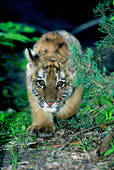 In order to conserve and grow the population of tigers in the wild a massive project has been undertaken that has created wildlife reserves in the tiger’s natural range. Many conservationist groups have come together to encourage local inhabitants to protect their tigers and to educate the world with the problems wild tigers are facing. Many locals still believe in using tiger parts for medicine and tribal rituals. Some simply kill them in order to sell the skins and parts for profit, and others feel that they or their livestock are threatened. With the help of private and public funding conservationists have been able to educate the people and create the reserves of land that the tigers now inhabit.
There is still more that needs to be done. In India, right now, a freeway is being built that is proposed to go directly through a tiger reserve. It is this sort of encroachment that began the decline of the wild tigers. People at that time did not understand the danger, but as we have become more and more educated we can no longer claim ignorance. We must stand together to protect what little land is left for our wild tigers. We are their only hope.
To help, please check out any of the following websites:
http://www.nationalgeographic.com/ and search for Cause an Uproar.
Subscribe to:
Posts (Atom)