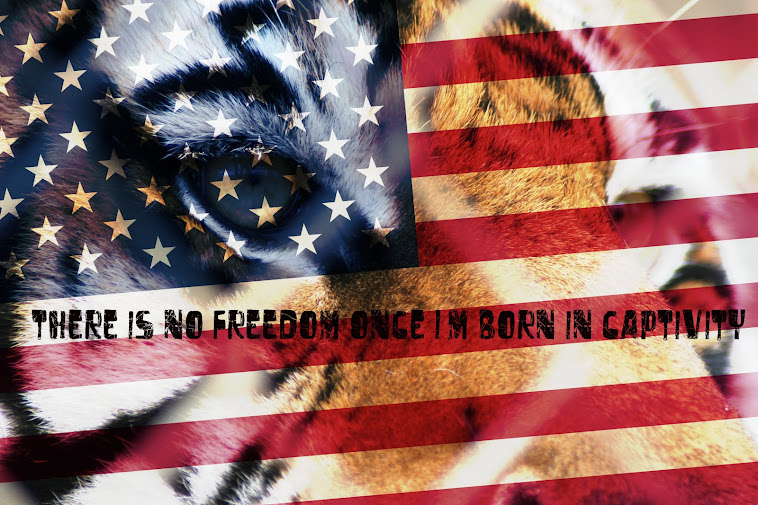
Thursday, February 27, 2014

Good News From WWF!

My intention today was to talk about captive big cats in the U.S. but some good news from World Wildlife Fund has me too happy to think about anything else!
In 2010 WWF launched a Tiger campaign in India and Nepal with a goal of doubling the number of wild tigers in that region by 2022. Today, in the new issue of WWF's magazine, I read that the numbers of wild tigers in this region has increased by 63% since 2009! How awesome is that?! It's so encouraging to see that the hard work of Global Tiger Recovery Program, the dedication of rangers, forest guards and army personnel, has spurred this growth. The rangers and guards protect the land, prey, and tigers in this region from poaching and therefore have helped to increase the birthrate of tigers in the area. With more hard work like this in other tiger regions, we may yet save the tiger in the wild so that our grandchildren can see them and say, my grandma/grandpa helped to save the wild tigers. Your donations to organizations like this help to fund big projects like this one so that we can be a part of saving these magnificent animals. Be a member, like me, and take pride in little moments like this one, knowing that, in some small way, you were part of the reason there are more tigers in Nepal. Go to www.worldwildlife.org to see how you can help. And check out the bottom of my blog page for more links to wildlife protection and information sites.

Have a grrrrreat day! :)

Tuesday, February 25, 2014

Tiger Facts

Tiger (panthera tigris):
We have lost 97% of our wild tiger population in the last 100 years.There are as few as 3,200 tigers left in the wild today. The largest of all Asian cats, tigers weigh from 220-660 pounds and can be from 4-10 feet long. Tigers rely on tropical rainforest, evergreen forests, mangrove swamps, grasslands, savannas and temperate forests for their hunting habitat. Tigers typically hunt alone and depend on sight and sound to find their prey. A tiger can consume up to 88 pounds of meat at one time. Tigers typically give birth to 2-3 cubs every 2-2.5 years. About half of all cubs die before they are 2 years old. The Amur (Siberian) tiger is the largest subspecies of tiger with males weighing up to 660 pounds! The Sumatran tiger is the smallest subspecies and usually only reach around 310 pounds. The greatest threat to tigers in the wild is loss of habitat. Tigers have lost 93% of their habitat due to deforestation and urban development. Female tigers are thought to have a home territory of about 7.7 miles while males typically have around 23-39 miles, overlapping several female territories for breeding purposes. Tigers are great swimmers and can be found in the water on hot days, which in their range is nearly every day! Tiger conservation through World Wildlife Fund concentrates on maintaining current habitat space and teaching locals about tigers. Many Asians, especially the Chinese, still believe that tiger parts cure illness and provide other health benefits. They still hunt tigers for their parts and skins and hopefully, with education, this practice will stop. Conservation Parks have been set up in India and other parts of their range in hopes of preserving what little space they have left. Poaching is illegal and rangers keep watch on the park at all times. In my next segment I will be discussing the U.S. tiger situation, which is so uncontrolled and unfortunate that, for me, it is hard to believe that intelligent citizens still allow these things to go on here.


This map shows the tiger's range in 1850 in yellow/beige
and their range in 2006 in green

Monday, February 24, 2014

New Regulations Needed for Captive Bears

Although this site is primarily concerned with the welfare of big cats, when I see something to do with any animal living in sub-standard conditions I must post and protest. My mission and responsibility as a human being is to do whatever I can to help any animal in need.
Right now we have an opportunity to be heard regarding captive bears and the cages they are confined to. Bears of any size may be kept in cages as small as a dog run. For reference, think of a parking space...or smaller. With only concrete and chain link, these bears show signs of stress by pacing their cage and head butting the chain link fence. We must contact the USDA and let them know this is unacceptable. The USDA is allowing comments on a proposed change to how bears are kept under the Animal Welfare Act. You can go to the link below to make a comment letting them know how you feel about bears being kept in tiny concrete cages. The comment period is only until March 12, 2014, so please, go now and let the USDA know that we want bears to have sufficient room to run and play! Though they are captive, they deserve to have some comforts. Be polite when posting comments. Anger and attack will not get results. (Should you wish you may use and or modify the example letter I copied from PETA's website, which is posted below the link.) But remember, a personal comment makes much more of an impact than a copied one!

http://www.regulations.gov/#!documentDetail;D=APHIS-2012-0106-7118


Example Comment:
I was shocked to learn that the USDA—which is supposed to ensure the humane treatment of animals—allows roadside zoos and other licensees to keep bears in tiny cages and even concrete pits that deprive the animals of the opportunity to satisfy their basic needs and instincts. Bears in the wild have home ranges of up to thousands of miles, yet the USDA currently allows licensees to keep bears in tiny cages, where the animals can take only a few steps in any direction. A North Carolina judge ruled last year that a roadside zoo committed illegal cruelty to animals by forcing a bear to live in near total sensory deprivation in a concrete dog run that USDA inspectors found acceptable. Clearly, something must change in order to fulfill the intended purpose of the Animal Welfare Act. Ensuring the humane treatment of bears requires—at a minimum—specific regulations that are tailored to bears’ instinctual need to forage, explore, bathe, climb, and den, and hibernate. Please implement the proposed bear-specific regulations to ensure the humane treatment of captive bears.

Wednesday, February 12, 2014

H.R. 1998/ S. 1381, Big Cats and Public Safety Protection Act

The Big Cats and Public Safety Protection Act has a new number in the House and Senate. The new house number is H.R. 1998 and the new Senate number is S 1381. The bill remains the same, stating that it would be illegal to privately own and breed big cats. The passage of this bill would mean no more roadside zoos, no more backyard big cats and no more cub petting! It would also mean safety for the public from animals escaping from cages not constructed to standards necessary to keep them enclosed. No more occurrences like that in Zanesville, OH.  Please encourage your Representative and Senator to co-sponsor this bill. Check out www.bigcatlaws.com to send a quick letter to your Congress person.

Wednesday, May 23, 2012

H.R. 4122, Big Cats and Public Safety Protection Act

  Big Cats and Public Safety Protection Act of 2012 Bill Summary H.R. 4122, the “Big Cats and Public Safety Protection Act,” will ensure that lions, tigers and other dangerous big cats, which are bred to be sold and kept as pets or for financial gain in the U.S. in alarming numbers, do not threaten public safety, diminish global big cat conservation efforts, or end up living in horrible conditions where they can be subject to mistreatment and cruelty. The bill will prohibit breeding and private possession of big cats exempting only qualified, accredited AZA zoos, where they can be properly cared for and restrained.  Wild Animal Sanctuaries having given sanctuary and safe haven for big cats that have been confiscated for decades will be asked to take in animals. There is no possibility of determining the numbers of dangerous Exotic Big Cats being kept in private hands and what their condition is in the U. S., through the U.S. Department of Agriculture (USDA), state agencies, and local first responders. Only nine states have laws enforcing “no wild animals permitted”, the remaining states have weak or no laws in existence. This bill will require all persons who currently possess big cats to register those animals with USDA. After the bill becomes law, it will be illegal to breed any big cat except at accredited AZA zoos where breeding will be allowed for conservation purposes only. Violators of the law will have their animals confiscated along with any vehicles or equipment used to aid in their illegal activity, and could face stiff penalties including fines as much as $20,000 per animal, and up to five years in jail. Statistics- Since 1990 incidents involving Big Cats    21 Deaths  - 16 Adults 5 Children 246 Maulings 254 Escapes 143 Big Cats Killed 128 Big Cats Confiscations There are 29 States that have laws governing ownership of the Big Cats. There are 21 States that have no laws governing ownership of the Big Cats. No other country on our planet has so freely allowed the breeding and selling of Wild Animals as pets, or for financial gain, by providing a license for that ownership as does the U. S. Dept. of Agriculture. There is not one thing we can give a wild animal in captivity that they need. What they do need is to be born free, in their natural environment. Let your representative know you want their support on this bill! Find your representative at: http://www.house.gov/representatives/find/ Calls to your Rep will make far more difference than just an email, but if you would like to sign a prewritten letter that will be emailed to your local representative please go to http://capwiz.com/bigcatrescue/issues/alert/?alertid=61054081 Thank you! And please spread the word! The more people are educated the better chance we have of making real change!

Monday, May 21, 2012

Video on abuse at G.W. Exotic Animal Park

I have added a video at the bottom of my blog created by the Humane Society. The undercover video shows the abuse at G.W. Exotic Animal Park. For those of you who want to help me do something to stop this please visit my petition page at: https://www.change.org/petitions/u-s-department-of-agriculture-shut-down-g-w-exotic-animal-park

Together we can stop the abuse.

Friday, May 18, 2012

Shut Down G.W. Exotic Animal Park

Joe Schreibvogel operates a roadside zoo in Oklahoma with 1400 animals, including over 150 tigers, on sixteen acres, that has a history of serious animal abuse (see below).  He generates revenue by constantly breeding tiger cubs, ripping them from their mothers shortly after birth, and abusing them by carting them around from mall to mall charging people to pet them alongside a magic show he performs.  USDA rules prohibit using the cubs for this purpose after they reach 12 weeks old.  When he can no longer use them to make money, he “donates” (or by some reports sells) them, or brings them to his zoo. The fact is that real sanctuaries all around the country are able to support their rescue and animal care work without adding to the problem by breeding and without abusing animals to make money.  They do that by operating facilities that have excellent animal care that donors appreciate and want to support.  They also do that by being financially responsible and not taking in more animals than they can support.
  In most cases his animals will at best spend their entire lives in small, prison-like cells.  Current USDA regulations permit keeping an adult tiger in a cage smaller than a parking spot. Many of his cats are sent to places with a history of animal abuse violations.
Here are a list of the USDA citations and fines the park has had:
Instead of creating a sanctuary, Joe created a facility that in its early years, 2000 – 2004, was cited repeatedly by USDA for serious violations of the minimum standards of the Animal Welfare Act.  USDA has limited enforcement resources.  They can only take a few animal abusers to court, so they reserve that for only the most blatant cases.  Typically they will issue citations for years, giving the licensee every opportunity to correct the out of compliance conditions before they consider filing a lawsuit. After years of citations they finally sued Joe.  In April 2005 the agency filed a 20-page complaint against Joe with numerous charges, including the following:
* Failure to provide adequate veterinary care
* Failure to handle animals so that there was minimal risk of harm to the animal and to the public
* An incident in which a tiger escaped from his enclosure and attacked and seriously wounded a camel
* Transportation of 15 tigers and lions in a manner that allowed urine, feces, or both to contaminate the animals caged below
* Lack of potable water for 18 lions, 23 tigers, 15 bears, 20 cougars, three leopards, and a pig
* Lack of employees present to provide care to 80 large, dangerous cats
* Lack of knowledge by employees about how often the animals were fed
* Filthy, wet, unsafe, and dilapidated enclosures
* Failure to handle animals in a manner that does not cause trauma, behavioral stress, physical harm, or unnecessary discomfort
* Failure to provide animals with minimum space
In January 2006 he consented to a $25,000 fine and a probation period. Based on inspections since, hopefully conditions have improved.  But, for over five years before USDA forced changes, the animals Joe “rescued” were subjected to the horrible conditions USDA cited.
In September 2009 USDA issued a warning notice for alleged violations of the AWA handling requirements stemming from separate incidents that occurred in 2007 and 2008, one involving a customer injured by a lion cub.
On September 13, 2011 Schreibvogel was cited by USDA for failing to provide veterinary care to two animals.
On December 1, 2011 Schreibvogel was cited by USDA for improper handling related to an incident in September 2011 at GW Park where young boy was injured by a tiger cub.
23 CUBS DIED AT GW PARK
Schreibvogel is currently under investigation by USDA for the deaths of 23 tiger cubs and separately for other possible violations of the AWA.  The cubs died between April 2009 and May 2010 according to what Joe’s people reported to the FDA.  Any responsible facility would have done necropsies on the  initial deaths.  Joe finally did necropsies on one or two of the last cubs to die and called in FDA to test the formula.  The necropsies indicated curdled milk formula in the stomachs of the cubs.  So, Joe insists that the cubs were killed by “bad formula.”  But, the FDA testing of the samples Joe provided and of samples from the manufacturer found nothing wrong with the formula.  This formula must be stored, handled, mixed and administered properly.  Since FDA found nothing wrong with the formula itself, if the cubs did die from the formula, the most logical conclusion is that it was because Joe’s staff did not do one or more of these activities properly.
Please stop the abuse Schreibvogel is perpetrating on these animals and the disservice he is doing the public by claiming he is helping to preserve the species by breeding these animals. There have been more than enough citations and fines, and more than enough undercover research to prove that this man is incapable of properly caring for these animals. How many more animals will you allow to suffer?
Follow this link to sign my petition asking the USDA to shut down GW Exotic Animal Park: http://www.change.org/petitions/u-s-department-of-agriculture-shut-down-g-w-exotic-animal-park

(Information acquired through 911animalabuse)